The Rise of the Irish Pub NYC Scene Among Young Professionals
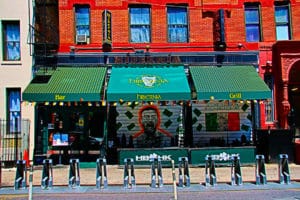
There was a time when many New Yorkers, especially younger office workers, treated the Irish pub as a default rather than a destination. It was where you ended up after work because it was nearby, because someone in the group knew the bartender, or because no one wanted to overthink the choice. That old convenience still matters, but something more deliberate has happened over the past several years. The Irish Pub NYC scene has become a genuine social anchor for young professionals who want ease, familiarity, and a sense of place in a city that often feels expensive, fast, and transactional.
That change did not happen because Irish pubs suddenly reinvented themselves into something unrecognizable. Quite the opposite. Their appeal has grown because many of them resisted the pressure to become overly polished, overly branded, or overly concept-driven. In a nightlife economy crowded with reservation-only cocktail lounges, highly curated wine bars, and restaurants that seem designed as much for a camera roll as for conversation, the Irish pub has stayed remarkably good at one thing: giving people a room where they can actually be with one another.
For young professionals in New York, that has turned out to be more valuable than it might have looked a decade ago.
Why the Irish pub fits this moment in New York
Young professionals in the city live with a set of contradictions. They often earn more than peers elsewhere, but their fixed costs are punishing. Their calendars are packed, but genuine downtime feels scarce. They are surrounded by people, yet making and keeping friendships can feel strangely difficult. The places that win in that environment are rarely the flashiest. They are the ones that lower the effort required to show up.
An Irish pub does that almost better than any other urban venue format.
You do not need a month-ahead reservation. You usually do not need a dress code strategy. You are unlikely to be rushed through a 90-minute seating window. There will be beer on tap that most people recognize, a whiskey list that rewards curiosity without demanding expertise, and food sturdy enough to absorb the first round and justify the second. The room will probably have televisions, but it will not necessarily revolve around them. There may be music, but usually at a level that still permits actual speech. That balance matters.
A lot of young professionals are not looking for nightlife as performance. They are looking for a place where six coworkers can become actual friends after 6:30 p.m., where two people can have a low-pressure first date, where a recent transplant can start becoming a regular somewhere. The modern rise of the Irish pub in New York has everything to do with that emotional utility.
A room built for conversation, not just consumption
The design of a classic Irish pub deserves more credit than it gets. Many bars in New York either maximize density or optimize for spectacle. An Irish pub often does neither. Instead, it creates what operators would call dwell time without making guests feel managed.
Dark wood, moderate lighting, close-set tables, long bars, mirrors, framed memorabilia, and compact standing areas all contribute to a specific kind of comfort. These are not neutral design choices. They reduce the social risk of entering a space alone or in a small group. They make it easier to settle in. They also let the room flex. At 5:30 p.m., it can serve office spillover. By 8:00 p.m., it can support dates, birthdays, and reunion drinks. By late evening, it can take on a more energetic rhythm without losing its basic identity.
Young professionals respond strongly to venues that do not force them into a single mode. A rooftop bar may be great for one kind of evening. A serious cocktail den may suit another. But an Irish pub can handle more social scenarios with less friction. That adaptability is a major reason the category has expanded beyond nostalgia and into relevance.
I have heard versions of the same comment from plenty of New Yorkers in their twenties and thirties: “It’s one of the few places where everybody in the group is comfortable.” That is not a small thing in a city where social plans frequently collapse under the weight of competing preferences and budgets.
Price still matters, even in a city used to high prices
No honest discussion of the Irish Pub NYC scene can ignore economics. Young professionals may have more spending power than college students, but many still operate with close attention to value. Rent, student loans, transportation, and aggressive dining-out prices shape how often people go out and how long they stay once they do.
Irish pubs tend to sit in a useful middle range. They are rarely the cheapest places in town, especially in Manhattan, but they often feel fair. A pint, a burger, a shepherd’s pie, a plate of fish and chips, or a round of snacks can still register as a night out rather than a financial mistake. Even when prices have risen, as they have nearly everywhere, the perceived value remains strong because the experience is not trying to justify itself through exclusivity.
That perceived fairness matters as much as the menu itself. A young attorney finishing a long day in Midtown, a tech worker in Flatiron, a consultant living in Long Island City, and a media assistant meeting friends in the West Village all read value differently. Yet many arrive at the same conclusion when they scan the options. The Irish pub offers enough quality, enough atmosphere, and enough social flexibility to feel worth it.
There is also a practical detail operators understand very well. People stay longer when they feel comfortable ordering incrementally. A room that supports “one more round” without pressure tends to outperform one that tries to maximize every check from the start. For young professionals, that translates into a style of going out that feels spontaneous instead of extracted.
The after-work revival gave the scene fresh energy
Much of the rise has been tied to the return, partial return, and reshaping of office life. New York’s business districts are not identical to what they were before remote work became mainstream, but they are far from dormant. Hybrid schedules have changed the weekly rhythm rather than erased it. Tuesdays through Thursdays now carry unusual social weight, and bars that understand that pattern have benefited.
Irish pubs are exceptionally well positioned for this schedule. They know how to catch the office crowd without making everyone feel like they are trapped in a networking event. That distinction is critical. Most young professionals do not want their personal life to feel like a continuation of Slack, LinkedIn, or internal meetings. They do, however, want convenient spaces where professional and personal relationships can blend naturally.
The best Irish pubs near office clusters have become transition zones. People arrive in work clothes, but the room helps them shed the tone of the day. A manager buys the first round for a team. Someone invites a friend from another company. A table of four becomes a cluster of nine. Those loose, low-stakes social expansions are much harder to manufacture in venues built around strict seating, elevated menu formats, or loud music.
In practical terms, many operators have adjusted accordingly. Happier hour windows may stretch a bit. Kitchen offerings often remain broad enough for both snackers and those who missed dinner. Staff members get very good at reading whether a group wants speed, privacy, or banter. That service style, warm but not intrusive, is one of the most underrated strengths of the category.
Young professionals are seeking authenticity, even when they define it loosely
Authenticity is a slippery word in hospitality. It gets overused, and too often it means little more than surface aesthetics. Still, something real is happening in the renewed interest in Irish pubs. Many younger New Yorkers are tired of bars that feel interchangeable from one neighborhood to the next, or one city to another. They want places with texture, history, and idiosyncrasy.
An Irish pub has a head start here because even newer ones borrow from a deep visual and social vocabulary. Done well, that does not feel staged. It feels reassuring. A polished brass rail, a lived-in wooden bar top, a bartender who remembers what you drink, an owner who actually circulates through the room, framed photos that mean something to the people who put them there, these details create trust.
Of course, not every place achieves that balance. Some venues lean too hard on decorative shorthand and end up with a kind of theme-park Irishness. Young professionals can spot that quickly. They may still go once, especially for convenience, but they are less likely to adopt it as “their place.” The pubs that gain traction tend to be the ones that combine a recognizable Irish identity with local legitimacy. They belong to their block, not just to a concept.
This is where neighborhood context matters a great deal. In parts of Midtown, utility and speed may define success. In the East Village or Lower Manhattan, character and social cross-pollination may matter more. In neighborhoods with more recent residential growth, such as parts of Brooklyn or Queens, the Irish pub can function almost like a communal living room for people still building routines.
Sports, music, and ritual without overprogramming
Another reason the Irish pub resonates with young professionals is that it offers structure without demanding commitment. Trivia nights, live music, major football matches, rugby, GAA, Premier League mornings, holiday gatherings, and St. Patrick’s season all create reasons to return. Yet the room usually remains legible to someone who just walked in for one drink.
That is a delicate balance. Bars that overprogram can start to feel exhausting, especially for people whose work lives are already overscheduled. Irish pubs often succeed because their rituals feel embedded rather than imposed. The sporting calendar matters, but it does not erase the pub’s baseline identity. The music adds life, but it does not have to dominate the whole operation.
For younger regulars, these rituals help transform a venue from a convenience into a habit. A group may first meet there after work because it is practical. They come back for a match on a Saturday morning. Then they host a birthday there because the staff knows them. After a while, the pub becomes part of the architecture of their social life.
That kind of loyalty is not accidental. It grows from repeated experiences that are reliably good, even if they are not extravagant.
Networking feels less forced over a pint
One of the quieter drivers behind the rise of the Irish Pub NYC scene is that it has become a better setting for professional relationship-building than many spaces explicitly designed for networking. Young professionals often dislike events that announce themselves as strategic. They know they should make connections, but they resent environments where every interaction feels transactional.
Irish pubs soften that problem. They create what might be called accidental professional intimacy. A conversation that starts about a football match turns into a discussion about hiring. Two friends bring colleagues from different industries, and by the end of the night someone has a useful introduction. A regular bartender learns who is changing jobs and who is looking for talent. None of this feels formal, but it can be professionally meaningful.
This matters especially in sectors where trust still drives opportunity. Finance, media, law, real estate, consulting, technology, nonprofit work, and creative industries all run partly on relationships. Young professionals are not just chasing fun when they spend time in these spaces. They are also building social capital in a way that feels human rather than calculated.
That said, the trade-off is real. If a pub becomes too dominated by one company, one industry, or one clique, it can lose the openness that made it appealing in the first place. Smart operators watch for that. The healthiest rooms stay mixed.
Women and mixed groups have helped reshape the category
It would be a mistake to talk about Irish pubs as if they still rely on a predominantly male customer base. One of the biggest shifts in the scene is how broad the audience has become. Younger women, mixed-gender friend groups, and couple-heavy crowds have all played a role in making the modern Irish pub feel more inclusive and more socially versatile.
Part of that change comes from improved food programs, better interior upkeep, more thoughtful beverage menus, and stronger service standards. Part of it comes from culture. The old stereotype of the Irish pub as a narrow, male, beer-only domain simply does not hold in many of New York’s most successful examples. A good Guinness still matters. So do a proper whiskey pour and a dependable lager list. But so do wine by the glass, a competent espresso martini, nonalcoholic options, and staff who can make different kinds of guests feel equally welcome.
This widening of the customer base has changed the energy of the room. It is one reason young professionals are more likely to choose an Irish pub for first dates, small celebrations, or group meetups that cut across social circles. The best places feel neither too rowdy nor too restrained. That middle ground is hard to achieve, and easy to underestimate.
What separates the lasting pubs from the trendy ones
Not every surge in popularity leads to staying power. Some pubs are simply enjoying a cyclical moment as younger drinkers rotate away from more expensive and more formal nightlife formats. Others are building something durable.
The places with staying power usually do a few things exceptionally well:
- They maintain consistency in service, even on crowded nights.
- They balance atmosphere with comfort, never letting noise or crowding tip too far.
- They price in a way that preserves repeat business.
- They honor Irish pub traditions without becoming caricatures.
- They cultivate regulars without making newcomers feel excluded.
Those principles sound obvious, but they are difficult to execute in New York. Labor is expensive, rent is unforgiving, and customer expectations are high. A pub that gets known as too slow, too packed, too loud, or too opportunistic on price can lose momentum quickly. Young professionals may be loyal once trust is built, but they are also ruthless about abandoning places that no longer fit their needs.
The operators who seem to understand the current moment best know they are not just selling drinks. They are selling relief from friction.
The neighborhood effect is impossible to ignore
The Irish pub experience in New York is not one thing. A Midtown pub serving finance workers on a Wednesday evening has a different social function from a Brooklyn neighborhood local with a younger residential crowd, or a Lower East Side spot that mixes longtime regulars with recent arrivals.
In Midtown, the pub often works as a decompression chamber. Timing matters, speed matters, and the bar team may see a sharp wave of arrivals between 5:00 and 7:00 p.m. In residential neighborhoods, the rhythm can be slower and more relationship-driven. Guests may return multiple times in a week, not just on “office days.” In downtown nightlife zones, an Irish pub can serve as both meeting point and reset button, the kind of place where a group starts the night or regroups after trying somewhere louder.
This local variation has helped the category thrive. It is not locked into one demographic or one use case. For young professionals, that means the Irish pub can follow them through different phases of city life. It works when they are new to town, when they are grinding through long office weeks, when they have a tighter budget, when they start dating seriously, and later when they want a dependable neighborhood place instead of a scene.
That longevity gives the format unusual https://privatebin.net/?6e890bc18d97f2eb#24EGy63XKUdMi11NWSxrzjRpKFBpoGireyTiSupMG9r9 power.
There are risks to popularity
Popularity solves some problems and creates others. As more young professionals embrace Irish pubs, the best-known venues can become victims of their own success. Crowds get denser. Wait times grow. Prices drift upward. The room that once felt intimate starts feeling generic because too many people are using it the same way.
There is also the risk of imitation. Once operators in other bar categories notice the appeal of a low-pressure, high-comfort environment, they may copy the surface features without the deeper hospitality values that make the format work. Faux-traditional bars can flood the market quickly in New York. Most do not last, but they can blur the category for a while.
For guests, the answer is usually discernment. A strong pub reveals itself in subtle ways. The staff has rhythm. The room feels lived in rather than merely styled. The crowd is mixed in age and purpose. The menu is edited enough to be reliable, broad enough to be useful. Most importantly, you leave feeling better than when you arrived, not just more entertained.
That standard sounds modest. It is not. In a city with endless options, places that consistently improve people’s evenings have real staying power.
Why the appeal is likely to last
The rise of the Irish Pub NYC scene among young professionals is not just a passing preference for Guinness, whiskey, or dark wood interiors. It reflects a broader hunger for hospitality that feels grounded. New Yorkers in their twenties and thirties are under no illusion that the city is getting simpler or cheaper. If anything, the opposite is true. That pressure makes dependable social spaces more valuable, not less.
Irish pubs succeed because they meet people where they are. They do not ask guests to perform sophistication or commit to a rigid experience. They provide a familiar framework that can hold many kinds of nights, from quick solo drinks to sprawling reunions. They reward regularity. They welcome spontaneity. They make socializing easier in a city where almost everything else can feel logistically difficult.
For young professionals, that combination is powerful. It supports friendship, dating, networking, ritual, and neighborhood belonging without announcing itself as a solution to any of those things. The best Irish pubs do their work quietly. They pour well, feed people properly, and create the kind of room where conversations stretch.
That is why the category has outgrown stereotype and become a fixture again. Not because it changed into something trendy, but because it stayed useful, warm, and convincingly human while much of the city’s nightlife chased novelty. In New York, novelty gets attention. Reliability gets regulars. And regulars are what build a scene.
Hibernia Bar
401 W 50th St
New York, NY 10019, United States
Phone: +1 212-969-9703
FAQ About Irish Pub NYC
What is the best Irish pub in NYC?
The best choice depends on your location and preferred atmosphere. Hibernia Bar is a neighborhood Irish pub in Hell's Kitchen offering Guinness, Irish whiskey, pub food, and sports viewing.
Where do Irish people go in NYC?
New York's Irish community gathers in many neighborhoods and venues. Hibernia Bar welcomes Irish expats, local residents, and visitors at 401 W 50th St, just off Ninth Avenue.
Where can I watch GAA games in New York?
Hibernia Bar lists GAA among the sports it shows. Call +1 212-969-9703 to confirm coverage and opening times for a particular match before visiting.
What is the difference between a bar and a sports bar?
A sports bar emphasizes televised games and a shared viewing atmosphere. Hibernia combines sports viewing with the food, drinks, and hospitality of a neighborhood Irish pub.